
How to Choose a 12kW+ Fiber Laser Cutting Machine for Industrial Metal Fabrication
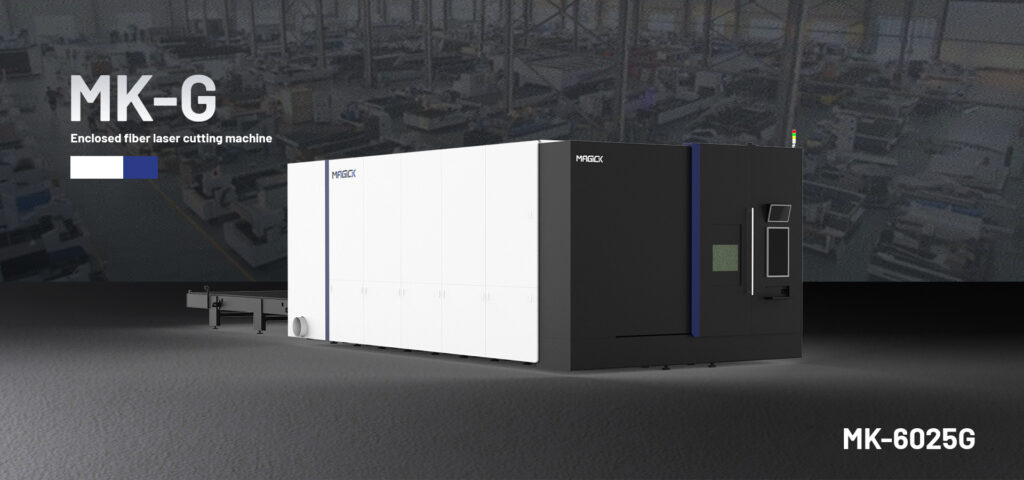
Investing in a 12kW+ fiber laser cutting machine is not just an equipment upgrade; it is a strategic transformation of your entire production line. At this power level, you are no longer just cutting metal—you are racing against material handling bottlenecks, strict thermal management, and massive operational costs.
Buying the wrong high power system will not just waste your capital; it will disrupt your factory. This guide strips away the marketing fluff and provides a brutally honest framework for selecting the right fiber laser cutting machine for industrial metal fabrication.
Why a 12kW+ Fiber Laser Cutting Machine Matters for Industrial Metal Fabrication
What makes a 12kW+ fiber laser cutting machine different from lower-power models
A lower-power machine (e.g., 3kW or 6kW) cuts thick plates by slowly burning through them with oxygen. A 12kW fiber laser cutting machine vaporizes metal. The fundamental difference lies in piercing time and gas utilization. A 12kW system can pierce 20mm carbon steel almost instantly and allows you to cut thick stainless steel with nitrogen, leaving a clean, oxidation-free edge that requires zero secondary grinding.
Which industrial metal fabrication businesses benefit most from high power laser cutting
This is not a machine for light job shops. A high power fiber laser cutting machine is built for heavy industries: shipbuilding, agricultural machinery, construction equipment, steel structure manufacturing, and high-volume toll processing centers. If your core business involves churning out high volumes of 10mm to 30mm plates, this machine is your ultimate weapon.
When a 12kW+ fiber laser cutting machine becomes a better investment than plasma or lower-power laser systems
Plasma is cheap but leaves a heavy bevel, wide kerf, and requires extensive post-processing. Lower-power lasers simply choke, warp the material, or fail entirely on plates thicker than 25mm. When your labor costs for edge grinding exceed your cutting costs, or when your current laser takes 15 seconds just to pierce a single hole in heavy plate, a 12kW+ machine transitions from a luxury to a financial necessity.
Define Your Production Needs Before Choosing a 12kW+ Fiber Laser Cutting Machine
What materials will your 12kW+ fiber laser cutting machine process most often
Do not buy a machine based on extreme outliers. If your production is 80% carbon steel and 20% stainless steel, spec the machine for that 80%. High power excels at cutting highly reflective materials like aluminum and brass without back-reflection damage, but you must know your core material mix before negotiating power.
How thickness range affects 12kW+ fiber laser cutting machine selection
Stop looking at “maximum cutting thickness” on a brochure. That number represents what the machine can slowly sever in a laboratory setting. Look at the “production cutting thickness.” A 12kW machine might sever 40mm steel, but its sweet spot for high-speed, high-quality, continuous industrial production is 10mm to 25mm.
Why daily output and shift schedule matter in industrial metal fabrication
A 12kW+ fiber laser cutting machine eats metal at a terrifying rate. If you only run a single 8-hour shift, your ROI timeline will be painfully long. These machines are designed to run two to three shifts a day. If your factory cannot feed it enough raw material, you are buying a sports car to sit in traffic.
How to Match Power and Working Area in a 12kW+ Fiber Laser Cutting Machine
How to choose between 12kW, 20kW, and 30kW fiber laser cutting machine options
- 12kW: The standard entry point for heavy industrial fabrication. Excellent balance of speed and CapEx.
- 20kW: Necessary if your core production shifts into the 25mm-35mm range and you require ultra-fast nitrogen cutting.
- 30kW+: For extreme heavy industry replacing multiple plasma tables, focusing on plates up to 50mm. Do not buy 30kW if your logistics team cannot load heavy plates fast enough to keep the laser cutting.
How to select the right table size for industrial metal fabrication workloads
Your machine’s working area must match the standard sheet sizes provided by your local steel mills. If your mill supplies 6×12 ft plates, buying a table sized only for 5×10 ft will result in massive material waste or constant pre-cutting.
Why 3015, 4020, 6015, 6020, and 6025 configurations serve different production goals
- 3015 (3m x 1.5m): Standard size, suitable for tight factory floors.
- 4020 (4m x 2m): The sweet spot for medium-heavy fabrication.
- 6020 / 6025 (6m x 2m / 6m x 2.5m): Essential for structural steel, long boom arms, or massive vehicle chassis. Larger tables also allow for “pendulum processing” (loading one half while the machine cuts the other).
Key Machine Features to Check in a High Power Fiber Laser Cutting Machine
Why machine bed stability matters in a high power fiber laser cutting machine
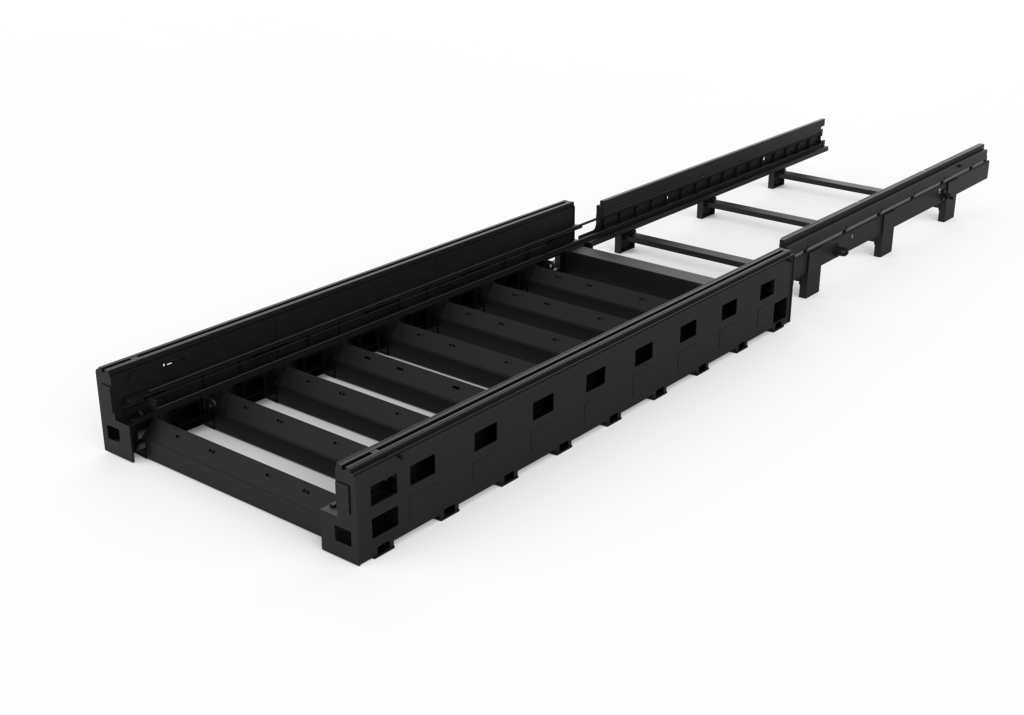
This is the most critical and often overlooked factor. You cannot strap a 12kW laser to a cheap, lightweight frame. At high speeds, the gantry accelerates at 2G or more. A weak machine bed will vibrate, distort, and destroy your cutting accuracy. Demand a heavy-duty plate-welded bed, properly thermally annealed, or a cast-iron bed to absorb the massive kinetic energy.
How enclosure design improves safety in industrial metal fabrication
A 12kW laser beam bouncing off a reflective surface will blind anyone in the factory instantly. A fully enclosed, light-tight design with CE/FDA-certified OD6+ laser safety glass is non-negotiable.
Why exchange table design increases productivity for sheet metal factories
An industrial metal fabrication laser cutting machine is only making you money when the laser is on. If it takes 5 minutes to unload a cut plate and load a new one, your expensive 12kW laser is sitting idle. A fast, hydraulic or heavy-duty motor-driven exchange table that swaps heavy plates in under 20 seconds is mandatory.
How dust extraction and exhaust systems affect long-term machine performance
Vaporizing 20mm steel generates a massive cloud of toxic metallic dust. If the machine lacks a high-volume, zoned extraction system, that dust will settle on the optics, ruining your expensive laser head within weeks.
Cutting Quality and Operating Cost of a 12kW+ Fiber Laser Cutting Machine
How a 12kW+ fiber laser cutting machine impacts edge quality and consistency
With 12kW or more, you unlock the ability to cut thick steel using Nitrogen or High-Pressure Air instead of Oxygen. This eliminates the oxidized black edge left by oxygen cutting, meaning parts can go straight to the welding or painting department without any mechanical grinding.
What gas consumption, electricity use, and maintenance cost mean for ROI
Prepare your infrastructure. A high power machine consumes vast amounts of electricity (often requiring a dedicated high-voltage transformer). If you cut with Nitrogen, cylinder gas is too expensive; you will need to invest in bulk liquid nitrogen tanks or a heavy-duty industrial air compressor setup to keep operating costs low.
How to evaluate speed versus actual production efficiency in industrial metal fabrication
Theoretical cutting speed is a marketing gimmick. Actual production efficiency includes piercing time, corner deceleration, and material loading. A machine that accelerates smoothly and pierces instantly will always outperform a machine with a higher “max speed” but unstable cornering.
Supplier Evaluation for a Fiber Laser Cutting Machine for Industrial Metal Fabrication
How to assess manufacturer experience and factory capability
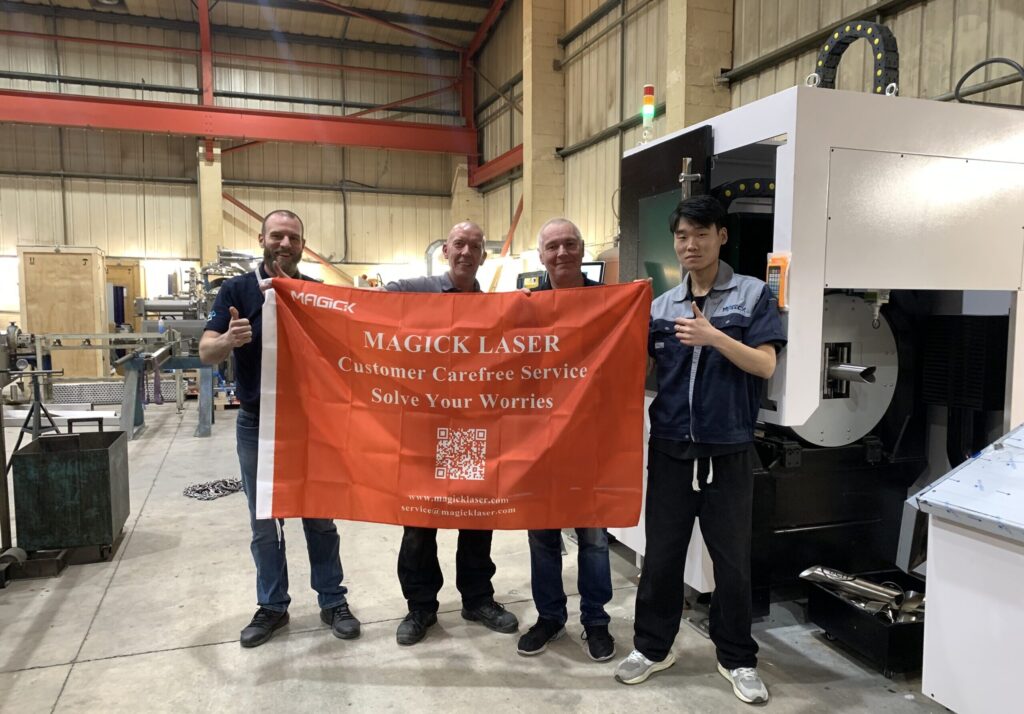
Anyone can buy a 12kW laser source and bolt it to a frame. Few can build a machine that handles 12kW continuously for 5 years without mechanical degradation. Ask the supplier how many high power fiber laser cutting machines they have actually installed, and demand to speak with a customer who has run their machine for more than two years.
What certifications and safety standards a fiber laser cutting machine should meet
If you are operating in North America or Europe, the machine must have strict CE, FDA, or UL compliance. Without these, your factory may fail safety audits, or worse, your insurance will not cover a workplace accident.
Why installation, training, spare parts, and after-sales service affect buying decisions
When a 12kW machine goes down, you lose thousands of dollars per shift. Before buying, verify where the supplier’s nearest service engineers are located. If they cannot guarantee rapid deployment of replacement cutting heads, optics, or servo motors, look for another supplier.
Final Checklist Before Buying a 12kW+ Fiber Laser Cutting Machine
Questions to ask before requesting a quotation
- What is the total weight of the machine bed?
- What brand is the cutting head, and is it specifically rated for high-power autofocus?
- What is the maximum acceleration (G-force), not just the max speed?
Technical information buyers should prepare before contacting the supplier
Do not ask a supplier “How much is your 12kW machine?” Instead, provide them with:
- Your maximum and average material thickness.
- Your daily tonnage of processed steel.
- Your factory’s current electrical capacity.
How to compare quotations for a 12kW+ fiber laser cutting machine objectively
Never compare just the laser source brand. Compare the structural integrity. Look at the servo motor wattage, the capacity of the water chiller, the zoning of the exhaust system, and the heavy-duty nature of the material exchange table. The cheapest 12kW machine on paper is almost always the most expensive one to operate in reality.
